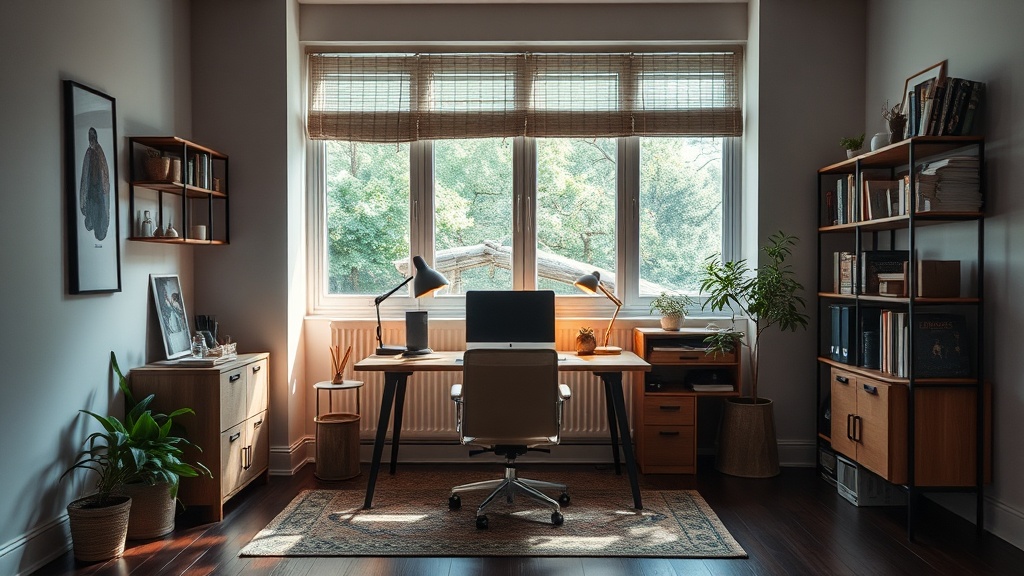
How to Design a Productive Study Space at Home

Why Your Desk Setup Matters More Than You Think
Research suggests that environmental cues play a significant role in cognitive performance and focus duration. When you sit in a space that is cluttered, poorly lit, or shared with your sleeping area, your brain struggles to differentiate between rest and deep work. This lack of distinction—often called context-dependent learning—is why you might find yourself staring at a textbook for three hours without absorbing a single sentence. This guide covers how to build a dedicated, high-performance study zone within a standard student living situation, whether you're in a tiny dorm room or a shared apartment.
Setting up a workspace isn't just about buying a fancy ergonomic chair (though that helps). It's about creating a psychological boundary. You need to signal to your brain that when you are in this specific chair, at this specific desk, with this specific lamp on, it is time to work. Without these cues, your productivity will remain at the mercy of your environment.
Where is the best place to study in a small apartment?
The biggest mistake students make is trying to study in bed. It's tempting, especially when you're tired, but the consequences are high. Studying in bed blurs the line between your sleep environment and your work environment, which can lead to both poor grades and chronic insomnia. If you don't have a dedicated room, look for corners that are physically separated from your-sleep-zone. Even a small rug or a different lighting setup can act as a visual boundary.
If you're stuck in a studio apartment, try to use a desk that faces a wall rather than a window or a television. Constant movement in your peripheral vision is a distraction. A wall provides a neutral, static backdrop that helps you focus on the task at hand. If you have to use the kitchen table, try to create a "ritual"—perhaps a specific coaster or a specific lamp—that you only use when it's time to study. This small action tells your brain: "The work session has begun."
Does lighting affect how much I can focus?
Lighting is often overlooked, but it's a heavy hitter in the world of productivity. Standard overhead lighting is often too harsh or too dim, leading to eye strain and fatigue. For long-term study sessions, you want a mix of ambient light and task lighting. A dedicated desk lamp with adjustable brightness and color temperature is a game-changer.
Daylight is the gold standard for keeping your circadian rhythm in check, so if you can position your desk near a window, do it. However, as the sun goes down, you'll need to transition to warmer, softer light to prevent the "blue light" issue from disrupting your sleep later. If you find yourself getting sleepy during afternoon lectures or study sessions, a brighter, cooler light can help keep you alert. You can find more on how lighting impacts biological rhythms through resources like the Sleep Foundation, which discusses how light exposure affects our internal clocks.
Organizing Your Digital and Physical Workspace
A cluttered desk is a cluttered mind. It's a cliché for a reason. Every object on your desk that doesn't serve a direct purpose for your current task is a potential distraction. If you're working on a biology essay, you don't need your math textbook, your snack wrappers, or your random mail sitting in your field of vision.
- The One-Task Rule: Only keep materials for your current subject on the desk.
- Cable Management: Tangled wires are visually noisy. Use simple clips to keep your laptop and phone chargers organized.
- The Digital Desktop: Your computer screen is part of your workspace. If your desktop is covered in random screenshots and old files, it creates a sense of chaos. Clean your desktop every Sunday night.
The goal is to reduce the "cognitive load"—the amount of mental effort required to process information. When your desk is clear, your brain can spend its energy on your coursework rather than filtering out the mess around you.
How can I stay focused in a noisy environment?
Noise is the enemy of deep work. Whether it's a roommate playing video games or the hum of a nearby coffee shop, sound can break your concentration mid-sentence. If you can't control the noise, you must learn to mask it. Many students find success with white noise or brown noise, which provides a consistent, soothing frequency that drowns out sudden sounds.
Noise-canceling headphones are a worthy investment, but they aren't a magic fix for everything. If you're studying in a library, try to find the "quiet zones" or use earplugs. If you're at home, a simple fan can create enough consistent white noise to mask much of the domestic chaos. For those who prefer music, instrumental tracks are generally better than songs with lyrics. Lyrics engage the language-processing part of your brain, which competes with the reading/writing part of your brain. This is why many students find lo-fi beats or classical music more effective for long-term focus.
| Distraction Type | Solution | Goal |
|---|---|---|
| Visual Clutter | Clear desk policy | Reduce cognitive load |
| Sudden Noise | White noise/Headphones | Consistent auditory background |
| Poor Lighting | Adjustable task lamp | Reduce eye strain |
| Digital Notifications | "Do Not Disturb" mode | Eliminate interruptions |
Finally, remember that your environment is a tool. If you find that you're consistently unproductive at your desk, don't just blame your willpower. Look at your setup. Is it too dark? Is it too messy? Is it too loud? Adjusting these physical variables is often much more effective than trying to force yourself to focus through sheer grit. For more tips on managing your mental energy and focus, check out the guides at American Psychological Association regarding cognitive fatigue.